EU Paid Russia $3.1B for LNG Amid War Price Surge
Alejandro Martínez ·
Listen to this article~3 min
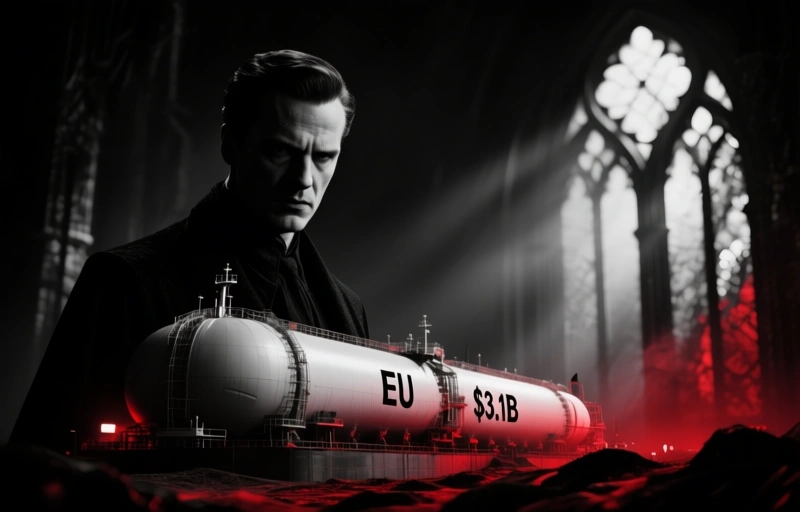
EU payments for Russian Yamal LNG surged to $3.1 billion in Q1, as war-driven price spikes created a massive revenue stream for the Kremlin from Arctic energy exports, highlighting complex energy trade realities.
Let's talk about a financial reality that's been flying under the radar. While headlines focus on sanctions and energy independence, a massive flow of cash from Europe to Russia continues. In just the first quarter of this year, European Union payments for Russian liquefied natural gas (LNG) from the Yamal project hit a staggering sum.
We're talking about $3.1 billion. That's billion with a 'B'.
This isn't just a number on a spreadsheet. It's a direct financial lifeline, fueled by the very price spikes caused by the war in Ukraine. It creates a complex paradox where efforts to punish the Kremlin financially are simultaneously undermined by the market's reaction to the conflict.
### The Arctic Revenue Engine
The Yamal LNG project, located deep in the Russian Arctic, has become a critical revenue source. It's a massive industrial operation, designed to extract, liquefy, and ship natural gas from some of the world's most remote and harsh conditions. The infrastructure alone is a feat of engineering, built to withstand temperatures that can plunge dozens of degrees below zero Fahrenheit.
Despite geopolitical tensions, the gas keeps flowing, and the payments follow. Here's what's driving this:
- **War-driven market volatility:** The conflict disrupted traditional pipeline gas supplies, sending global LNG prices soaring. Europe, scrambling for alternatives, became a prime buyer.
- **Contractual obligations:** Many long-term supply agreements for Yamal LNG remained in force, creating a legal and financial framework that's difficult to abruptly sever.
- **The energy security dilemma:** European nations faced a brutal trade-off between cutting off Russian funds and keeping homes heated and industries running, especially during the winter months.
As one energy analyst recently put it, "The market doesn't operate on morality; it operates on supply, demand, and contracts. The war created a shortage, and Yamal had the product to sell."
### The Ripple Effects for Payments Professionals
For those of us in the payments and finance sector, this situation is a masterclass in complexity. It highlights the intense friction between:
- **Policy goals** (sanctions, reducing Kremlin funding)
- **Economic realities** (contract law, energy needs, market forces)
- **Operational execution** (how these billions actually move through the global banking and payments system)
Every one of those $3.1 billion in Q1 payments had to navigate a web of correspondent banks, compliance checks, and currency conversions. It's a stark reminder that high-level policy announcements are one thing, but the gritty reality of international finance is another.
The takeaway? The path to true energy decoupling is longer and more financially entangled than it might appear. As long as the demand exists and the infrastructure is in place, money will find a way to flow. For professionals watching EU payment systems and cross-border finance, this Yamal LNG story isn't just about energy—it's a core case study in how geopolitics, markets, and payments infrastructure collide.